|
 |
 |
 |
What bullet
should I use? I frequently
get asked, which is the best muzzleloading bullet for me to
use? Well, it would be easiest just to recommend a
muzzleloader bullet that I particularly like using. But, that
wouldn't answer the question, nor would it be ethical, now
would it? In order to make an educated guess (and that is all
it would be), a few additional things need determining, like
what would the bullet be use for (hunting or target shooting)?
Once that is nailed down then there is a little more to work
with. Let's say for sake of discussion, this bullet is going
to be used for deer hunting. That brings other things into the
equation. In what type of terrain will it be used? How
far (click on link to see muzzleloader
ballistics chart) would the muzzleloading bullet be expected
to shoot and perform its intended purpose? Is a heavier or
lighter recoil/bullet preferred? Once this information is
established, next thing is to know something about the type of
weapon that will be used. This leads us to rate-of-twist (click the link to see a chart that shows which
weight and size bullets do best with different
rates-of-twist). The muzzleloading bullet will need to be
matched with the rifle's specific barrel twist. Once all this
has been determined, there are probably going to be a number
of equally good muzzleloading bullet sizes and weights that
might work. Of course determining which one will shoot best in
your smoke pole is a whole other topic for discussion. I will
write more on that particular topic in the near future.
Which muzzleloader bullet will shoot
best in my rifle? To address this subject we need
to establish a few truths.
- Not every muzzleloading bullet will shoot great in
your muzzleloader.
- There exists a powder and charge for each
muzzleloader bullet that will work best for your
muzzleloader.
- It is up to you to find that accurate combination of
powder, charge and muzzleloader bullet.
- Consistency, in every step, of loading and firing our
muzzleloader aids accuracy.
Now, let's address these truths. Most of us have already
experienced the first truth. Let's take a closer look at why.
Matching the rate-of-twist
of our muzzleloader's barrel with the proper bullet should be
a primary consideration to achieving desired accuracy. Now
that we've picked the bullet for our rifle, now we need to
give the bullet its best chance to perform. What I mean is,
don't just try one load of powder. We might need to try
several different powders and loads before we find that magic
combination. If we just try one or two charges, because they
worked best with the last bullet used, then we are probably
giving up too soon. Sometimes as little as 2 grains can make
the difference.
This leads us into the second truth: There exists a powder
and charge for each muzzleloader bullet that will work best
for our muzzleloader. This is true but, it doesn't imply great
performance, just the best performance possible with that
particular muzzleloader bullet and rifle combination.
It should be obvious by now there is more to discovering
which muzzleloader bullet is going to give us the greatest
accuracy and performance possible. Trying a few different
bullets with one charge and basing our decision on their
performance under those limited conditions is inadequate.
Determining which muzzleloader bullet will perform best in our
particular muzzleloader may require some hard work on our
part. If the muzzleloader bullet we are considering is not
going to give us the down range performance and trajectory we
desire, then why waste time and money on testing. Pick only
those bullets that will meet our requirements and then start
the process of finding which one will work best. You might
have guessed by now, that I do not recommend pellets for
testing, since they generally limit your charge
variations.
To print within the same area shot after shot, you need to
do the same things shot after shot. You can not expect the
same results if you vary between-shot routines. Without
consistency there is no accuracy.
Black Powder Cleaner #1.
Have you ever experienced a problem with your breech plug
sticking and being hard to take out? Well, so have I and here
is what I do about it. First, block the breech plug by
inserting a spent primer in it. Then stand you rifle on some
paper against something at a slight angle. Pour a table spoon
or two of Black Powder Cleaner #1 down the barrel and let it
set about 20 minutes or so. It should eat away that crud ring
that causes the plug to stick and make it easy to unscrew. A
nice thing about this cleaner is you can salvage what you pour
in the barrel for use later; it doesn't quit working even when
dirty.
Oh yeah, its one heck of black powder cleaning solution
too. Just dampen a clean cotton patch with cleaner and swab
the barrel with it. For stubborn fouling, several patches may
be required. Follow up with clean dry patches until clean.
After cleaning treat you gun with the rust prevention of your
choice.
Yesterday after some shooting at the range I popped my .25
ACP Encore breech plug out and as usual it had a lot of crud
on it. I normally dislike cleaning the breech plug because it
usually get black all over everything it comes into contact
with. Well, this time I thought I would try something
different. I put my breech plug into a pill container bottle,
which was approximately the same diameter as the plug and
poured just enough Black Powder Cleaner #1 to cover it, and
went about doing other things like cleaning the rest of the
rifle, using the Black Powder Cleaner #1. I think I left the
breech plug soaking about an hour. I took my .25 ACP Encore
breech plug out of the solution, careful to save the solution,
and wiped it down with a cloth dampened with Black Powder
Cleaner #1, and to my surprise the cloth did not have much
fouling on it at all. The breech plug was shining clean after
wiping it off a little.
This morning I noticed the vile of cleaning fluid was not
dirty, but clear, because the fouling residue had settled to
the bottom. My first thought was wow, I need a picture (click here to see picture) of this
to show people. I reckon it would be pretty easy to pour the
clear part of the liquid into another container for future
use, without loosing much. How
nice. | |
|
|
|
Welcome
Welcome to R&P Muzzleloading!
Our number one goal is to provide you with the best
possible shooting experience and service.
Muzzleloading is all about consistency, accuracy and the humane
harvesting of the game animals you are pursuing. We are here
to assist you to that end.
Shooting or hunting with blackpowder
bullets is a very popular sport these days. To say
shooting black powder bullets has improved over the years is an
understatement. As the quest for an extended range blackpowder
bullet continues, the Precision Rifle bullets offered by R and P
Muzzleloading are an example of just how far black powder bullets
have come. R and P Muzzleloading also contains informative material
and many muzzleloader accessories designed to improve your
muzzleloading shooting experience and accuracy with your muzzle
loader rifle.
Muzzleloader rifles have improved, shouldn't your muzzleloader
bullets keep pace with them? If you have come to accept the typical
4 inch group at 100 yards for hunting with black powder then you owe
it to yourself to consider the sub minute of angle (MOA) groups
possible with the Precision Rifle muzzleloader bullets. This
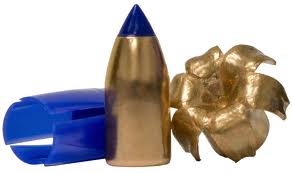
includes the Dead
Center muzzleloader bullets, QT_muzzleloader_bullets,
Extreme
Elite muzzleloader bullets, Keith
Nose HP muzzleloader bullets, and the unique Dead
Center Duplex sabot muzzleloader bullets, which are designed to
cause you to hit dead center every time. Randy Wakeman declares the
Dead Center muzzleloader bullets the bullet
of the year.
There are things you as a black powder shooter can do to help
improve the accuracy of your muzzleloader and cause it to hit dead
center. Consistency is the name of the game. Here is a link to some
helpful tips that might help you to shrink that group a little: A
muzzleloader accuracy solution that works.
Hello Ray,
Well the time on the shooting range with
different loads and bullets paid off. With your help I had settled
on a 235 grain QT bullet and a 120 grain charge of Triple Seven FFG
powder. I felt this was the best combination for Manitoba deer hunt
where I might have a close shot or one out to 200 yards. Luckily it
was close, 32 yards, but a straight on shot into his chest. The QT
did the job and the buck went right down. The bullet was found under
his skin along his side and had expanded well as the photos show.
Thanks for helping me make this a successful hunt! I was hunting
with Sugarloaf Outfitting in Grandview, Manitoba.
My buck did go right down, he did some
kicking but never got up. I was a little surprised because the
bullet never hit any parts of the shoulders or legs. I think it was
the shock of the bullet that kept him down until he died from the
loss of blood - certainly less than a minute, maybe 30 seconds. I
was reloading and watching him; just in case another shot was
needed.
I was using a Winchester X-150 with which I'm very satisfied. My
son was along and was hunting with an that we converted to the 25
ACP brass/primer. He saw a monster but couldn't get a shot. I'll
start hunting with that rifle here in CT next week; there's a big
one here I'd like to get with it (see my game camera photo
attached).
The weight of the deer by the outfitters
scale was 200 lbs live weight but I have to believe it was more than
that based on other deer I've gotten. He certainly isn't the
"monster" Canadian whitetail that some hunters get but the hunting
was tough and I'm very satisfied with the buck. I actually tracked
him in the soft snow and called him back to me with
rattling/grunting.
Best regards, Don Greene |